Tuesday, May 15, 2012

Keiser Report: Countdown to Armageddon

May 15, 2012 by

In this episode, Max Keiser and co-host, Stacy Herbert have a field day dissecting Jamie Dimon's 'egregious, terrible mistake,' the possible insider trading around those so-called mistake and what the Leveson Inquiry may tell us about the SEC's Mary Schapiro's 'focus' on these oh so egregious mistakes. In the second half of the show Max talks to Nomi Prins, a former senior executive at Goldman Sachs and Bear Stearns, about the problems at JP Morgan's London trading desk.

Follow Max Keiser on Twitter: http://twitter.com/maxkeiser

Watch all Keiser Report shows here:
http://www.youtube.com/playlist?list=PL768A33676917AE90 (E1-E200)
http://www.youtube.com/playlist?list=PLC3F29DDAA1BABFCF (E201-current)

Open Borders: Fast and Furious: Infowars Exclusive

May 12, 2012 by
 
Patrick Henningson interviews elected state officials in Arizona and provides a broad primer to the Fast and Furious scandal that has been going on under different names for decades.

Capital Account - Gerald Celente calls out Jamie "two-bit" Dimon and his Financial Crime Syndicate

May 14, 2012 by

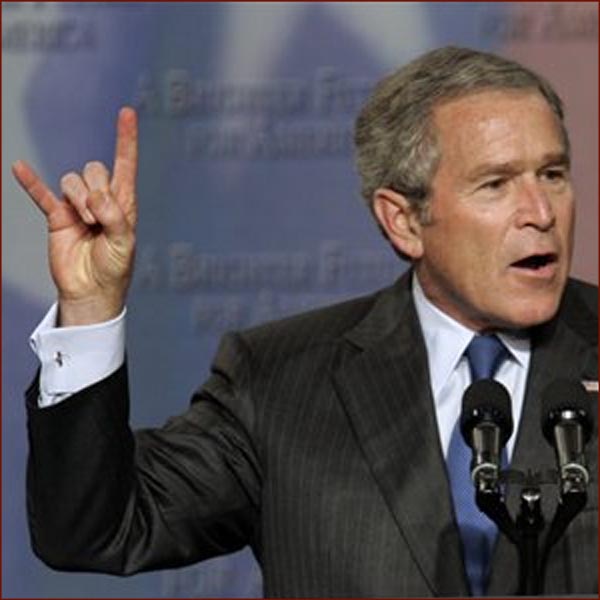
George W Bush Found Guilty Of War Crimes

By Yvonne Ridley
Information Clearinghouse
May 13, 2012

IT’S OFFICIAL – George W Bush is a war criminal.
In what is the first ever conviction of its kind anywhere in the world, the former US President and seven key members of his administration were today (Friday) found guilty of war crimes.

Bush, Dick Cheney, Donald Rumsfeld and their legal advisers Alberto Gonzales, David Addington, William Haynes, Jay Bybee and John Yoo were tried in absentia in Malaysia.

The trial held in Kuala Lumpur heard harrowing witness accounts from victims of torture who suffered at the hands of US soldiers and contractors in Iraq and Afghanistan.

They included testimony from British man Moazzam Begg, an ex-Guantanamo detainee and Iraqi woman Jameelah Abbas Hameedi who was tortured in the notorious Abu Ghraib prison.

At the end of the week-long hearing, the five-panel tribunal unanimously delivered guilty verdicts against Bush, Cheney, Rumsfeld and their key legal advisors who were all convicted as war criminals for torture and cruel, inhumane and degrading treatment.

Full transcripts of the charges, witness statements and other relevant material will now be sent to the Chief Prosecutor of the International Criminal Court, as well as the United Nations and the Security Council.

The Kuala Lumpur War Crimes Commission is also asking that the names of Bush, Cheney, Rumsfeld, Gonzales, Yoo, Bybee, Addington and Haynes be entered and included in the Commission’s Register of War Criminals for public record.

The tribunal is the initiative of Malaysia’s retired Prime Minister Mahathir Mohamad, who staunchly opposed the American-led invasion of Iraq in 2003.

He sat through the entire hearing as it took personal statements and testimonies of three witnesses namely Abbas Abid, Moazzam Begg and Jameelah Hameedi. The tribunal also heard two other Statutory Declarations of Iraqi citizen Ali Shalal and Rahul Ahmed, another British citizen.

After the guilty verdict reached by five senior judges was delivered, Mahathir Mohamad said: “Powerful countries are getting away with murder.”

War crimes expert and lawyer Francis Boyle, professor of international law at the University of Illinois College of Law in America, was part of the prosecution team.

After the case he said: “This is the first conviction of these people anywhere in the world.”

Read more

Ron Paul - Our Time Has Come

May 13, 2012 by

Greece on Fire: 'Disaster looms, with or without Euro'

May 14, 2012 by

Monday, May 14, 2012

Dimon Fortress Breached as Push From Hedging to Betting Blows Up

From Bloomberg.com

Original source

David Olson, a former head of credit trading in JPMorgan Chase & Co. (JPM)’s chief investment office, learned about risk as a U.S. Navy nuclear submarine pilot.

When he joined the bank in 2006, his new commander, Chief Executive Officer Jamie Dimon, was transforming the once- conservative unit from a risk manager to a profit center.

“We want to ramp up the ability to generate profit for the firm,” Olson, 43, recalled being told by two executives. “This is Jamie’s new vision for the company.”

That drive has now shattered JPMorgan’s cultivated reputation for policing risk and undermined Dimon’s authority as a critic of regulatory efforts to curb speculation by too-big- to-fail banks. It also may cost Chief Investment Officer Ina R. Drew, one of the most powerful women on Wall Street, her job. As U.S. and U.K. investigators descend on the firm following Dimon’s announcement last week of a $2 billion trading loss, lawmakers are pointing to the breakdown at the largest U.S. bank as evidence that tougher rules are needed.

Dimon pushed Drew’s unit, which invests deposits the bank hasn’t loaned, to seek profit by speculating on higher-yielding assets such as credit derivatives, according to five former executives. The CEO suggested positions, a current executive said. Profits surged over the next five years as assets quadrupled to $356 billion and employees were given proprietary- trading accounts, current and former executives said.

‘Wall Street Hubris’

Dimon said on May 10 that the unit made “egregious mistakes” by taking flawed positions on synthetic credit securities and that New York-based JPMorgan could lose an additional $1 billion or more as it winds down the position. The U.S. Securities and Exchange Commission, the Federal Reserve and the Commodity Futures Trading Commission are investigating, according to people familiar with the probes.

The loss was particularly surprising for JPMorgan, the bank whose $2.32 trillion balance sheet makes it the largest in the U.S. and whose traders were the first in the mid-1990s to create credit derivatives, which let firms and investors insure themselves against losses on debt. It was also a blow to Dimon, 56, who has been the most outspoken critic of the Volcker rule, meant to restrict banks from betting their own money.

Read more

France24 - Business Report

May 14, 2012 by

Sparks could fly when Hollande visits Merkel

May 14, 2012 by

Global shares, Euro hit as political risks pile up


Euro token pretending to be silver based money
Original source

By Richard Hubbard

LONDON | Mon May 14, 2012 5:23am EDT

(Reuters) - Uncertainty over the impact of a potential Greek exit from the euro on the debt-laden 17-nation currency bloc drove a rush to safety by investors on Monday, sending the single currency to near four month lows and European shares down 1.5 percent.

Problematic negotiations on forming a new Greek government have increased the chances it will be unable to meet the conditions of its bailout deal, and a worsening fiscal position in Spain has added to the sense of crisis facing the region.

The list of political risks facing the euro area grew on Sunday when German Chancellor Angela Merkel's conservatives suffered a crushing defeat in an election in Germany's most populous state.

"Selling rallies in risk assets seems the best way to make money in most asset classes given the event risk is still very real this week." said Chris Weston, an institutional dealer at IG Markets.

Safe haven German bonds and the U.S. dollar gained from the drive for safety with the June German Bund future setting a record high of 143.28 in early trade.

Riskier Spanish and Italian government bonds took the brunt of the selling with revived concerns about Spain's banking sector also sapping demand.

Spanish 10-year yields rose nine basis points to 6.12 percent with equivalent Italian yields 8 bps higher at 5.76 percent.

The negative tone in riskier assets will make for a difficult environment for Italy's 4.5 billion euros in debt sales later in the day, with borrowing costs set to rise. Spain also tests market appetite for its debt on Thursday.

GLOBAL GROWTH FEARS

The dollar meanwhile has risen 0.2 percent against a basket of major currencies to 80.45 .DXY , helping send the Australian currency, often a barometer for global growth, down to US$0.9979, its lowest level since December.

Underlining the negative sentiment caused by the crisis in Europe, China's decision on Saturday to cut the amount of cash banks must hold as reserves, normally been seen as a pro-growth move, only served to fuel fears that the global economic outlook was likely to get worse.

China's move, triggered by last week's lacklustre industrial output data from what is the world's second largest economy, added to pressure on Asian share markets and commodities.

The MSCI's broad world equity index .MIWD00000PUS was down 0.2 percent after it had fallen two percent last week, while MSCI main emerging market index .MSCIEF fell over one percent.

In Europe, the key FTSE Eurofirst 300 .FTEU3 index of top European shares was down over 1.5 percent at 1,0061.95, led by a fall of 2.4 percent in euro zone banks .SX7E, and is only showing gains of 0.5 percent for the whole year.

The combination of political uncertainty and a slowing Chinese economy drove Brent crude oil below $112 a barrel to $111.40.

Gold, which has moved in tandem with riskier assets this year, did edge up to an intraday high at $1,585.39 an ounce on Monday as bargain hunters were attracted by the four-month lows hit last week, but gains were expected to be capped.

"I think for as long as the crisis in Europe drags on, it's going to keep sentiment broadly in check," said Nick Trevethan, a senior commodity strategist at ANZ Bank.